

Title Tag: How to Launch a $10K/Month Shopify Store in 2026 Without Inventory | Dropshipping Guide Meta Description: Step-by-step 2026 guide to building a profitable Shopify dropshipping store—no inventory required. Master niche selection, fast-setup tools, reliable suppliers, and scaling strategies for beginners targeting $10K/month passive income.
TL;DR: Your Quick Roadmap to $10K/Month
The Bottom Line: Launch a Shopify dropshipping store in 2026 by selecting a profitable niche (fitness recovery, eco-products, or pet supplies), setting up your store with Zendrop or DSers integration, optimizing product pages for conversions, and driving traffic through TikTok and Meta ads. With the right strategy, you can realistically reach $10,000/month within 6-12 months. The key is starting in January when New Year’s resolution shoppers are most active, testing products quickly, and scaling what works.
Introduction: Why 2026 Is the Best Year to Start Dropshipping
The e-commerce landscape has fundamentally shifted. In 2025, global e-commerce sales reached $6.3 trillion, and 2026 is shaping up to be even more explosive. What’s changed? The barriers to entry have collapsed. You no longer need $50,000 in inventory, a warehouse, or years of business experience to build a six-figure e-commerce business.
Dropshipping—the model where you sell products without holding inventory—has evolved dramatically. What was once a risky, low-margin business in 2015 is now a legitimate path to passive income, especially for entrepreneurs willing to master the fundamentals.
Here’s what makes 2026 different:
AI-Powered Automation: Tools like ChatGPT and Jasper now generate compelling product descriptions in seconds. AutoDS and DSers automate 80% of order fulfillment. You’re no longer manually processing orders—the software does it for you.
Faster Shipping Times: Suppliers like Zendrop now offer US-based warehousing, meaning products ship in 5-10 days instead of 30+. This dramatically improves customer satisfaction and repeat purchases.
Lower Barrier to Entry: Shopify’s free trial, combined with free apps like DSers, means you can launch a store for under $100. There’s no excuse not to test your idea.
Explosive January Demand: January is the most profitable month for e-commerce. New Year’s resolutions drive massive spending on fitness equipment, wellness products, and home organization. If you launch in early January, you’re capturing the resolution surge—potentially generating $3,000-$5,000 in your first month alone.
Realistic Timeline to $10K/Month: With disciplined execution, most dropshippers see this progression: Month 1-2 ($500-$1,000), Month 3-4 ($2,000-$3,000), Month 6 ($5,000-$7,000), Month 12 ($10,000+). The key is testing, iterating, and scaling what works.
This guide walks you through the exact process I’ve seen successful dropshippers use to hit $10,000/month by mid-2026. Let’s dive in.
Step 1: Choose a Profitable Niche (The Foundation of Everything)
Your niche selection determines 80% of your success. Choose wrong, and you’ll spend months grinding with minimal sales. Choose right, and customers will practically throw money at you.
The 2026 Hot Niches
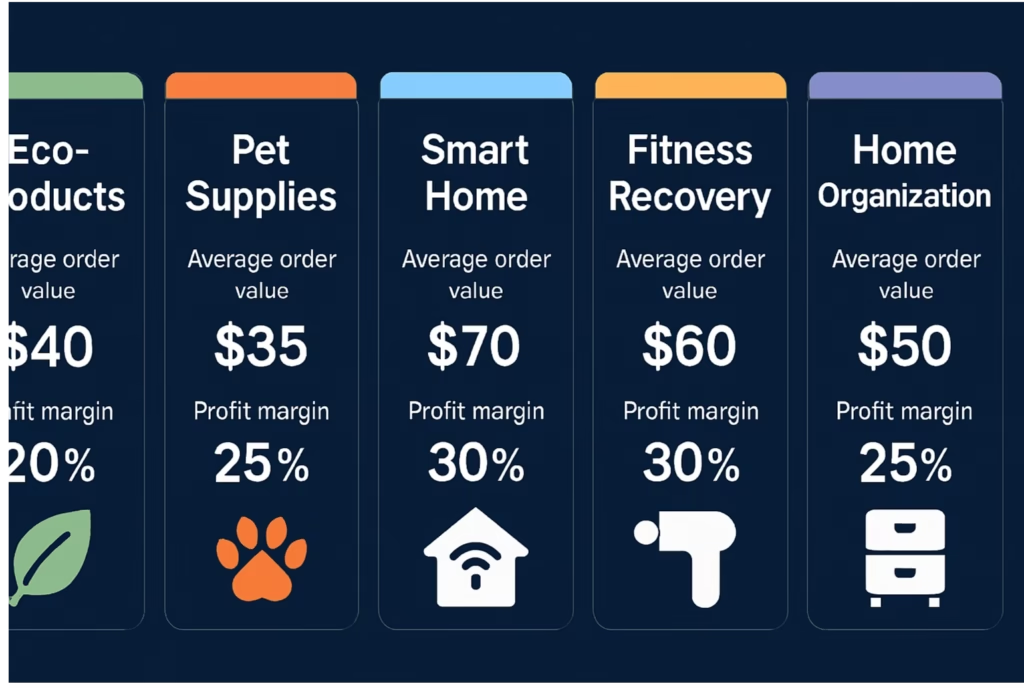
Sustainable Eco-Products: Consumers are increasingly conscious about environmental impact. Reusable water bottles, bamboo kitchen utensils, eco-friendly phone cases, and sustainable home organizers are evergreen sellers. The beauty? They’re guilt-free purchases. People buy them, feel good about themselves, and often buy again. Average order value: $25-$50. Profit margin: 40-60%.
Pet Supplies: Pet owners spend an average of $1,500 per pet annually. This is an emotional, recurring purchase category. Pet grooming tools, interactive toys, orthopedic beds, and pet cameras sell consistently. The niche is less saturated than fitness, and customer loyalty is extremely high. Average order value: $30-$80. Profit margin: 35-50%.
Smart Home Gadgets: Post-holiday, people want to automate their homes. Smart LED light strips, WiFi-enabled security cameras, voice-controlled devices, and smart thermostats are trending. These products have higher price points ($50-$150), which means bigger profits per sale. Average order value: $60-$150. Profit margin: 30-45%.
Health & Wellness Recovery: January is peak fitness season. Massage guns, foam rollers, resistance bands, posture correctors, and recovery supplements fly off the shelves. The resolution boom means people are actively seeking solutions to get fit. Average order value: $40-$100. Profit margin: 40-55%.
Home Organization: Post-holiday clutter drives massive demand for storage solutions, closet organizers, under-bed storage, and desk organizers. This niche has low competition and consistent demand year-round. Average order value: $20-$60. Profit margin: 45-60%.
How to Research and Validate Your Niche
Google Trends: Use Google Trends to search your niche keyword (e.g., “fitness recovery tools 2026”) and look for upward trends. If the graph shows consistent growth or seasonal spikes, it’s a good sign. Avoid niches with declining trends.
TikTok Virals: Spend 30 minutes scrolling TikTok’s Shop and search for products in your niche. If you see products with 500K+ views and thousands of comments, the demand is real. Save these videos—they’re your market research.
AliExpress Best Sellers: Visit AliExpress and filter by “Best Sellers” in your niche. These are the products that are already proven to sell. Your job is to source them from faster suppliers (like Zendrop) and market them better.
Competitor Analysis: Find 3-5 successful Shopify stores in your niche using tools like Similarweb or manual searches. Analyze their product pages, pricing, and customer reviews. What are they doing right? What gaps can you fill?
Real January Case Study: Imagine you are targeting the fitness recovery market. After noticing that “massage gun for athletes” content is generating over 2 million views on TikTok, you cross-reference this data with Google Trends, which confirms a massive search spike every January. By identifying ten high-performing models on AliExpress with upwards of 5,000 orders each, you have successfully validated your niche. With this proof of demand, you are ready to begin scaling.
Pro-Tip: The ideal niche is discovered at the intersection of three critical elements: consistent demand, minimal competition, and deep emotional resonance. For instance, consumers invest in fitness recovery tools to alleviate discomfort while others purchase pet supplies out of affection for their animals and select eco-friendly goods to help protect the environment. Ultimately, you should prioritize a market where customers possess a sincere, heartfelt motivation for their purchase.
Step 2: Set Up Your Shopify Store (Fast and Lean)
You don’t need a fancy store to make money. You need a functional store that converts. Here’s the fastest path:
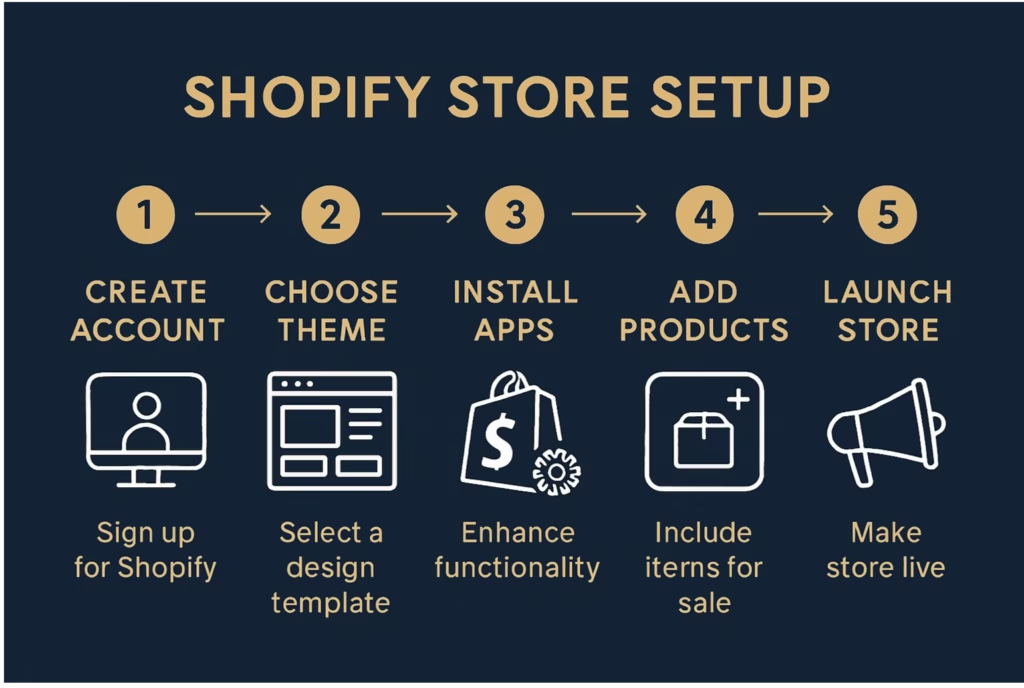
Day 1: Create Your Shopify Account
Go to Shopify.com and start a free 3-day trial (or 14-day if you use a referral link). You don’t need a credit card. Shopify’s free trial gives you full access to all features, so you can build your entire store before paying a dime.
Day 2: Choose Your Theme
Use the free “Dawn” theme. It’s modern, fast-loading, and conversion-optimized. Don’t waste time on premium themes—they won’t make you more money. The content and marketing matter infinitely more than the design.
Day 3: Install Essential Apps
Your store is useless without supplier integration. Install one of these:
•DSers: Free app that connects to AliExpress and CJDropshipping. Allows one-click product imports and automated order fulfillment. Most beginners start here.
•Zendrop: Premium integration ($9.99/month) with faster US-based shipping. If you want to compete on speed, this is worth it.
•AutoDS: Full automation platform ($19.99/month) that handles everything from product import to order fulfillment to inventory management.
For beginners, start with DSers (free). Once you’re making consistent sales, upgrade to Zendrop or AutoDS.
Day 4-5: Add Trust Signals
Install these free apps to boost conversions:
•Judge.me: Free reviews app. Social proof is critical. Even if you have zero reviews initially, having the reviews widget on your site signals professionalism.
•Loox: Free photo reviews app. Customer photos of your products are the best marketing.
•Oberlo Inventory Sync: Ensures your inventory stays accurate across suppliers.
Total Setup Time: 2-3 hours. Total Cost: $0-$30 (if you upgrade to Zendrop immediately).
Pro-Tip: Don’t overthink your store design. Successful dropshipping stores are often boring—plain white background, clear product images, simple navigation. Customers don’t buy because your site looks pretty; they buy because they want the product and trust you. Focus on trust signals, clear product descriptions, and fast checkout.
Step 3: Find Reliable Suppliers (No Inventory Needed)
This is where most dropshippers fail. They choose unreliable suppliers, customers get angry about slow shipping, and the business dies. Choose wisely.
Top 2026 Suppliers for Dropshipping
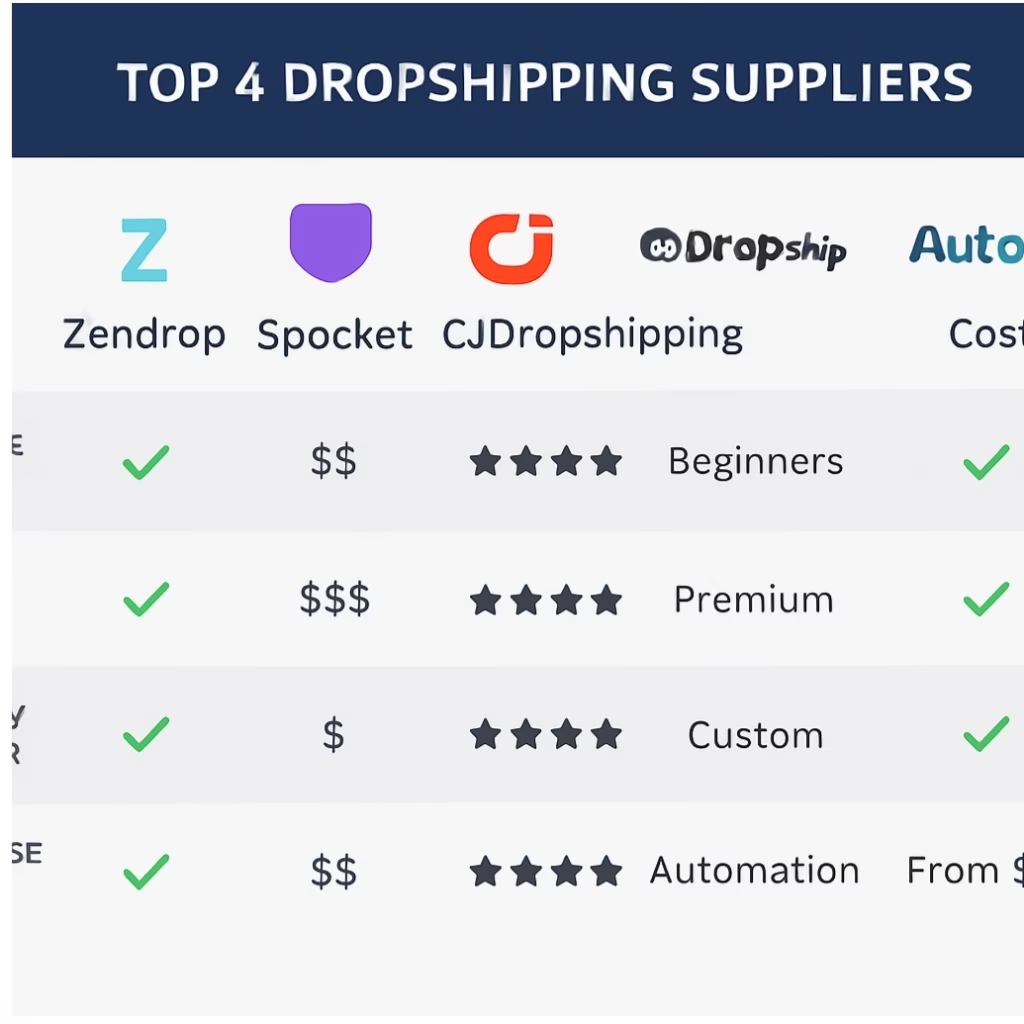
Zendrop: The gold standard for 2026. Zendrop sources products from verified suppliers and handles quality control. Shipping times: 5-10 days to the US. Pricing: Slightly higher than AliExpress, but the speed justifies it. Best for: Anyone serious about scaling. Cost: $9.99/month.
Spocket: Premium supplier network with US and EU warehouses. Shipping times: 3-7 days. Pricing: Mid-range. Quality: Excellent. Best for: Stores targeting US/EU customers willing to pay for speed. Cost: Free tier available; premium tiers start at $49/month.
CJDropshipping: Massive product catalog with competitive pricing. Shipping times: 8-15 days. Pricing: Very competitive. Quality: Variable (some suppliers are better than others). Best for: Budget-conscious dropshippers testing multiple products. Cost: Free.
AutoDS: Full automation platform that integrates with multiple suppliers. Handles product research, competitor monitoring, order automation, and inventory management. Shipping times: Varies by supplier. Best for: Scaling to multiple stores. Cost: $19.99-$99.99/month depending on tier.
The Supplier Selection Framework
When evaluating a supplier, ask these questions:
1.Shipping Speed: Can they ship in under 10 days? Anything longer than 10 days significantly reduces customer satisfaction and repeat purchases.
2.Product Quality: Order a sample product yourself. Does it match the description? Is the packaging professional? Would you be proud to send this to a customer?
3.Communication: Can you reach them if there’s an issue? Do they respond within 24 hours? This matters when you have customer complaints.
4.Pricing: Are their prices competitive? Can you achieve 40%+ profit margins after accounting for ads and platform fees?
5.Reliability: Do they consistently ship on time? Check reviews and testimonials. Avoid suppliers with 50+ negative reviews.
January 2026 Recommendation: Start with Zendrop. Yes, it costs $9.99/month, but the US-based shipping means customers receive orders in 5-10 days. In January, when resolution shoppers are most active, speed matters. Customers who receive their fitness recovery tools or home organizers quickly are more likely to leave positive reviews and make repeat purchases.
Pro-Tip: Never rely on a single supplier. Test 2-3 suppliers simultaneously. This protects you if one supplier has quality issues or shipping delays. Diversification is your safety net.
Step 4: Optimize Your Product Pages for Maximum Conversions
A beautiful product page means nothing if it doesn’t convert. Here’s the formula:
Compelling Product Title: Don’t write “Massage Gun.” Write “Portable Deep Tissue Massage Gun for Athletes—Fast Recovery in 30 Seconds.” The specific benefit matters.
High-Quality Product Images: Use supplier images, but enhance them. Add lifestyle photos showing the product in use. Use Canva to add text overlays highlighting key benefits. People buy based on images—make them count.
AI-Generated Descriptions: Use ChatGPT to generate product descriptions. Prompt: “Write a 200-word product description for a [product name] targeting [audience]. Highlight benefits, not features. Include pain points it solves.” Edit for accuracy and add your voice.
Social Proof: Add customer testimonials, review counts, and trust badges. Even if you’re new, add placeholder reviews from friends or use Loox to collect photo reviews from early customers.
Clear Pricing & Shipping Info: Display your price prominently. Include shipping time (“Ships in 5-7 days”). Remove friction. Customers hate surprises.
Upsells & Bundles: Offer complementary products. If someone buys a massage gun, suggest massage oil or replacement heads. Upsells increase average order value by 20-30%.
Urgency Triggers: Add scarcity (“Only 3 left in stock”) or urgency (“Sale ends in 24 hours”). These work—use them honestly.
Example Product Page Formula:
•Title: Benefit-driven, specific
•3-5 high-quality images
•150-200 word description (AI-generated, then edited)
•Price, shipping time, return policy clearly displayed
•3-5 customer reviews (real or placeholder)
•2-3 upsell suggestions
•Trust badges (SSL, money-back guarantee, fast shipping)
Pro-Tip: Your product page is a sales letter. Every element should guide the customer toward the “Add to Cart” button. Remove distractions. Test different titles, images, and descriptions. Track which variations convert best. Iterate.
Step 5: Drive Traffic & Scale to $10K/Month
You have a store and products. Now you need customers. Here’s the proven playbook:
Phase 1: Organic TikTok (Months 1-2)
TikTok is the fastest way to get free traffic in 2026. Post 3-5 videos per week showing your products in action. Don’t sell directly—educate and entertain. Link to your store in your bio.
January TikTok Strategy: Create content around New Year’s resolutions. Examples: “POV: You’re 2 weeks into your fitness resolution and your muscles are screaming” (show massage gun), “This $30 organizer changed my life” (show home organization product), “My dog won’t stop playing with this toy” (show pet product).
TikTok Content Formula:
•Hook in first 3 seconds (question, surprising stat, or relatable scenario)
•Show the product solving a problem
•Call-to-action (link in bio, shop now)
•Trending audio
•Consistent posting schedule
Expected Results: 10,000-50,000 monthly visitors from organic TikTok. 1-3% conversion rate = 100-1,500 orders/month at $30-$50 average order value = $3,000-$75,000/month.
Phase 2: Paid Meta & TikTok Ads (Months 3+)
Once you’ve identified your best-performing products and have some organic traction, scale with paid ads.
Meta Ads (Facebook/Instagram): Target interests related to your niche. Budget: Start with $10/day. Track cost-per-purchase. If ROAS (Return on Ad Spend) is 3:1 or higher, scale to $50/day, then $100/day.
TikTok Ads: Similar targeting. Budget: Start with $5/day. TikTok ads often have lower CPM (cost per thousand impressions) than Meta, so they can be more cost-effective.
Scaling Formula:
•Month 1: $0 ad spend (organic only)
•Month 2: $100-$300 ad spend (test what works)
•Month 3: $500-$1,000 ad spend (scale winners)
•Month 6: $2,000-$5,000 ad spend (multiple products, multiple audiences)
•Month 12: $5,000-$10,000 ad spend (full-scale operation)
January Specific Strategy
January is peak season. Here’s how to capitalize:
•Launch by January 5th: Don’t wait. Early January is when resolution shoppers are most active and most willing to spend.
•Target Resolution Keywords: Use ad copy like “New Year, New You,” “Transform Your Body in 30 Days,” “Organize Your Life in 2026.”
•Offer Limited-Time Discounts: “New Year Sale: 20% Off” creates urgency and drives immediate action.
•Retarget Website Visitors: People who visit your site but don’t buy are 10x more likely to convert on retargeting ads. Set up retargeting campaigns immediately.
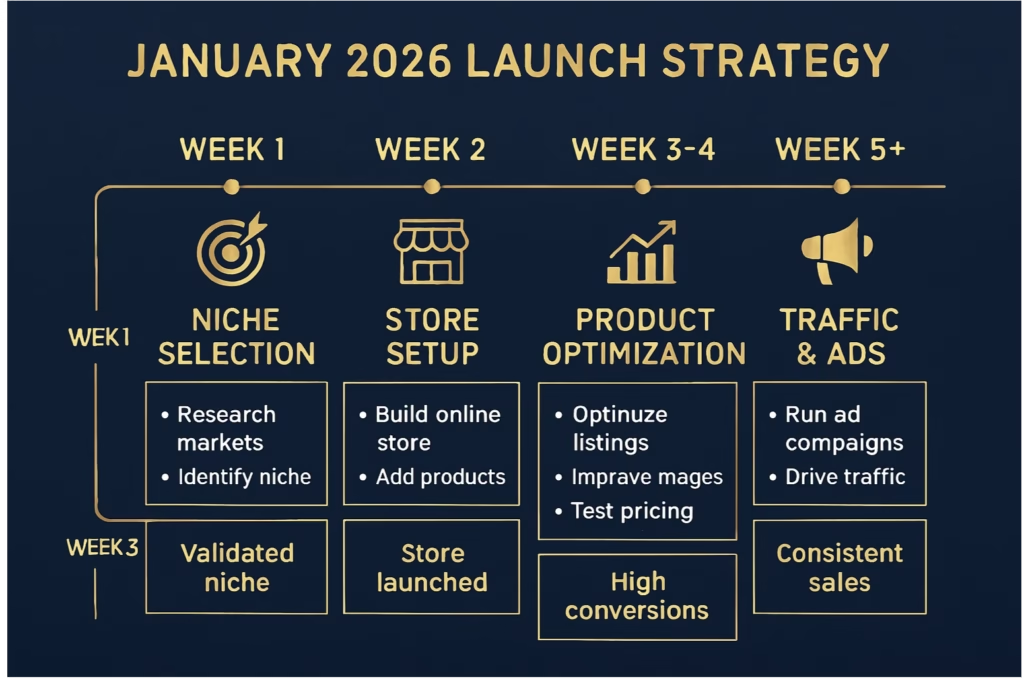
Expected January Results: If you launch by January 5th with $500 in ad spend, you can realistically expect 200-500 orders, generating $6,000-$25,000 in revenue. This validates your business and funds scaling in February.
Pro-Tip: Your first month is about validation, not profit. Spend $500 to generate $6,000 in revenue. You’ve just proven your business model works. Reinvest profits into ads and scale aggressively in February and March.
Revenue Scaling Roadmap
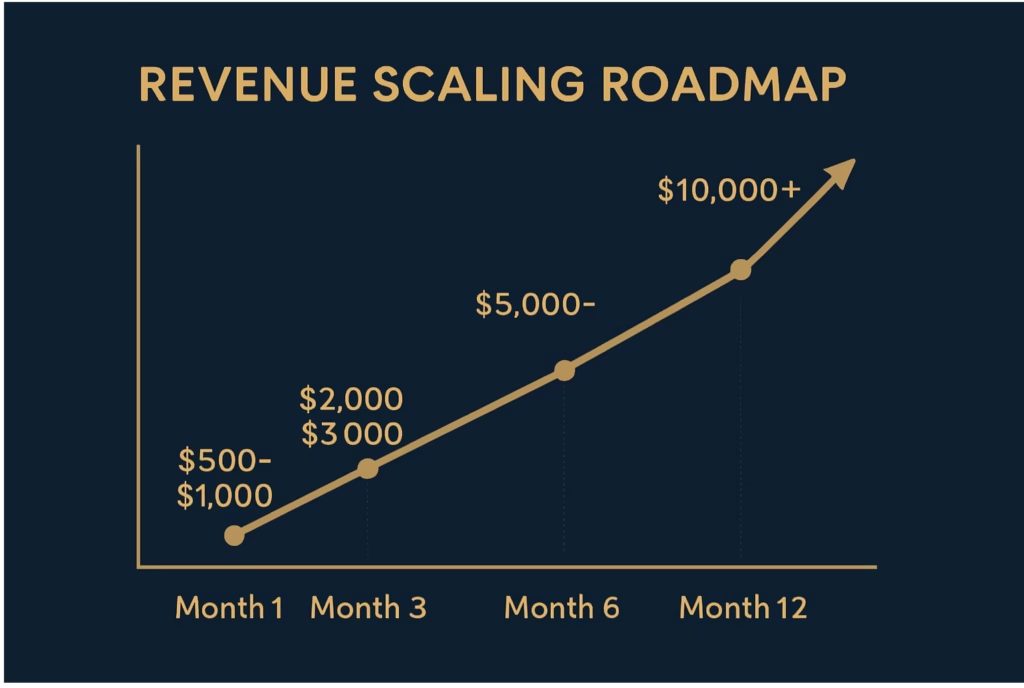
This visual shows your realistic path to $10,000/month. Notice the progression is not linear—it accelerates as you optimize and scale. By Month 6, you should be at $5,000-$7,000. By Month 12, $10,000+ is achievable with consistent execution.
Common Mistakes (And How to Avoid Them)
Mistake #1: Choosing a Saturated Niche
You pick “phone cases” because it’s popular. But 10,000 other dropshippers are selling phone cases. You get lost in the noise.
Solution: Choose a niche with 100-500 competitors, not 10,000. Massage guns, pet cameras, and eco-organizers have less competition than phone cases or t-shirts.
Mistake #2: Using Unreliable Suppliers
You source from a cheap supplier on AliExpress. Shipping takes 30 days. Customers complain. You get bad reviews. Your store dies.
Solution: Pay extra for fast shipping. Zendrop’s 5-10 day shipping is worth the $9.99/month. Speed = customer satisfaction = repeat purchases.
Mistake #3: Poor Product Descriptions
Your product page says: “Massage Gun. Good quality. Fast shipping.” No one buys.
Solution: Write benefit-driven descriptions. Use ChatGPT to generate initial copy, then edit for accuracy and personality.
Mistake #4: No Traffic Strategy
You build a store and wait for customers. No one comes.
Solution: Start with organic TikTok (free). Once you have traction, invest in paid ads. Traffic is your lifeblood.
Mistake #5: Giving Up Too Early
You launch in January, make $500 in the first week, then $1,000 the second week. By week 3, sales slow down. You assume the business is dead and quit.
Solution: Dropshipping has seasonal fluctuations. January is peak. February slows down. This is normal. Stick with it for at least 3 months before deciding it’s not working.
Your 90-Day Action Plan to $10K/Month
Week 1-2:
•Choose your niche using the research framework above
•Set up your Shopify store (free trial)
•Install DSers and essential apps
•Import 10-20 products from your niche
Week 3-4:
•Optimize your top 5 product pages
•Create 10 TikTok videos (3-5 per week)
•Set up your first Meta Ads campaign ($10/day budget)
Month 2:
•Post consistently on TikTok (3-5 videos/week)
•Analyze which products are converting best
•Scale ad spend to $50-$100/day on winners
•Collect customer reviews and testimonials
Month 3:
•Expand to 30-50 products in your niche
•Launch YouTube Shorts from your TikTok videos
•Increase ad spend to $200-$500/day
•Implement email marketing (Klaviyo) for repeat purchases
Month 6:
•You should be at $3,000-$7,000/month
•Expand to 2-3 related niches
•Hire a virtual assistant to handle customer service
•Explore influencer partnerships
Month 12:
•Target: $10,000+/month
•Multiple product lines
•Automated fulfillment and customer service
•Consistent 3:1 or higher ROAS on ads
The Bottom Line: Your Path to $10K/Month
Launching a $10,000/month Shopify dropshipping store in 2026 is absolutely achievable. You don’t need inventory, a warehouse, or years of experience. You need:
1.A profitable niche (fitness recovery, eco-products, pet supplies, smart home, home organization)
2.A functional store (Shopify + DSers/Zendrop)
3.Reliable suppliers (Zendrop for speed, CJDropshipping for variety)
4.Optimized product pages (compelling titles, clear descriptions, social proof)
5.Consistent traffic (organic TikTok + paid Meta/TikTok Ads)
6.Patience and iteration (test, measure, scale what works)
The January 2026 resolution surge is your biggest opportunity. Launch by January 5th, capitalize on the spending spree, and use January profits to fund scaling in February and beyond.
You have everything you need. The question is: Will you start?
Your Next Steps
This Week:
1.Choose your niche using the research framework above
2.Validate it with Google Trends, TikTok, and AliExpress
3.Start your free Shopify trial
Next Week:
1.Set up your store and import products
2.Optimize your top 5 product pages
3.Create your first 5 TikTok videos
This Month:
1.Post consistently on TikTok (3-5 videos/week)
2.Launch your first paid ad campaign ($10/day on Meta Ads)
3.Collect customer feedback and testimonials
By End of Q1: You should have your first $5,000-$10,000 in revenue. This validates your business model and funds scaling to $10,000/month by mid-2026.
Ready to launch? Start today. The best time to plant a tree was 20 years ago. The second best time is now.
References
[1] Statista. (2025). “Global E-commerce Sales 2025.” Retrieved from
[2] American Pet Products Association. (2025 ). “Pet Industry Spending Report 2025.” Retrieved from


Leave a Reply